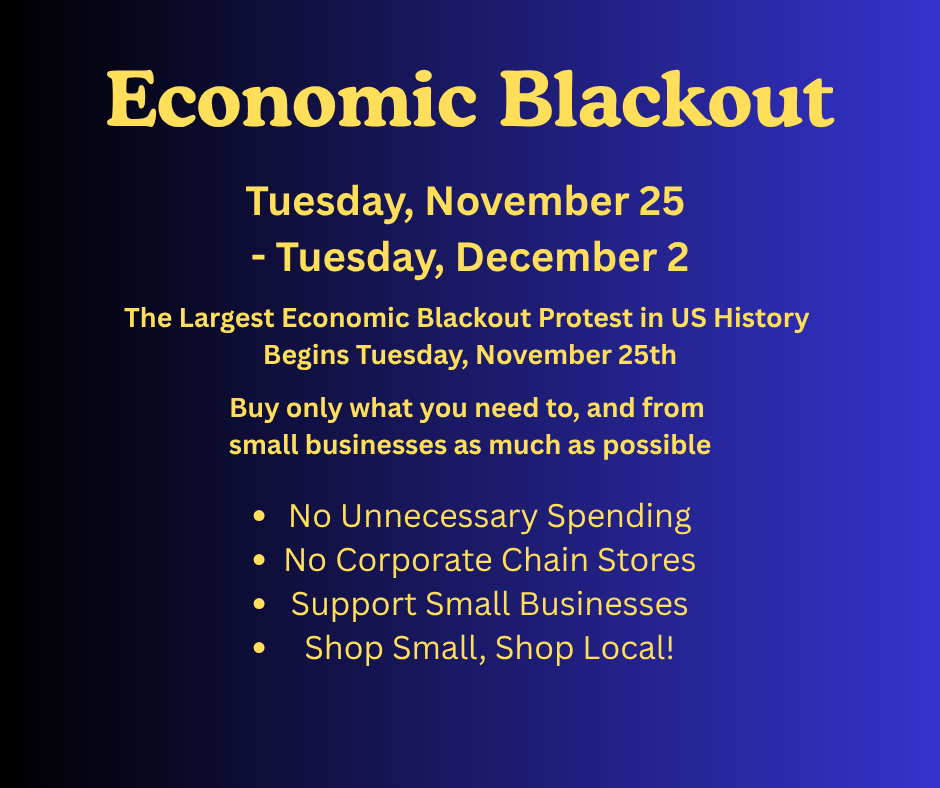
A coalition of grassroots organizations has launched a coordinated, nationwide economic shutdown from November 25 to December 2, demanding an end to corporate rule and political corruption.
The coordinated campaign, dubbed the Mass Blackout, urges Americans to completely withdraw their participation from the consumer economy during the busiest and most profitable shopping week of the year, including Black Friday (November 28) and Cyber Monday (December 1). That includes halting all spending, canceling subscription services, avoiding ad-driven platforms such as streaming services, and refusing to work.
Organizers note that Small Business Saturday (November 30) is exempted from the blackout, and participants are encouraged to use that day to invest in community-based, ethical alternatives to major corporations, preferably paying with cash.
~From the official press release at blackoutthesystem.com
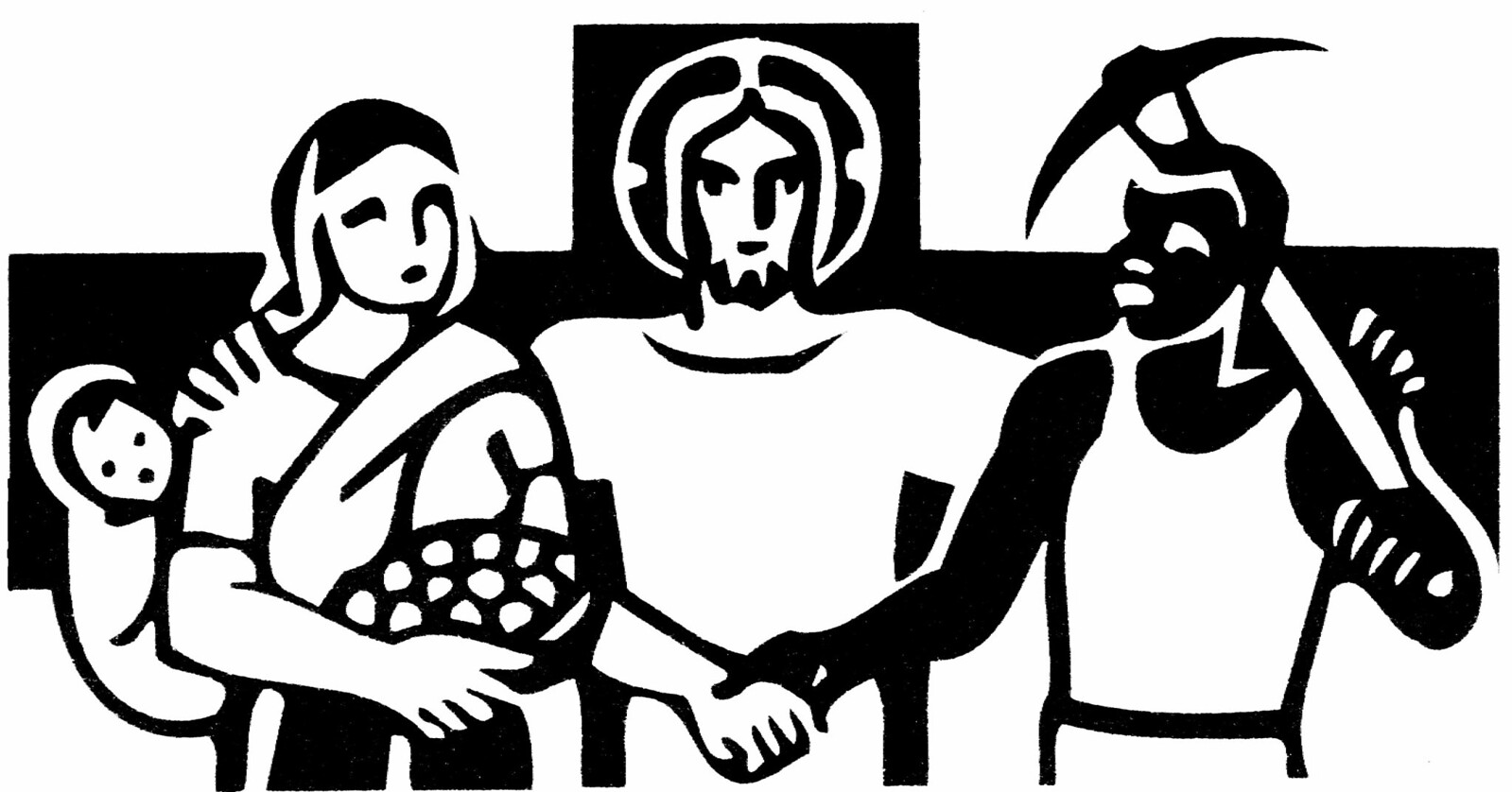
From a Catholic perspective, we find the aims and means of this movement to be very much in line with the economic principles of Catholic Social Teaching. In his foundational 1891 document Rerum Novarum, Pope Leo XIII laid out some basic principles of a just economic system, which includes the rights of workers to strike when such conditions are not being met.
The US Conference of Catholic Bishops’ Catholic Framework for Economic Life enumerates and encapsulates these principles into ten basic points. I won’t get into all of them here, but will offer some thoughts on a few of them.
- The economy exists for the person, not the person for the economy. It might be worth clarifying too that this principle applies to “Natural” or human persons, not to “corporate persons.” Our media and our politics tend to look at economic indicators such as stock market performance, which favor corporate interests but don’t take into account how the average person is faring. Which brings us to another important point from the Bishops’ document.
- A fundamental moral measure of any economy is how the poor and vulnerable are faring.Rerum Novarum reminds us that, “The richer class have many ways of shielding themselves, and stand less in need of help from the State”. By contrast, our government has a tendency to cater to the needs of the wealthy and privileged, while the poor and vulnerable must rely on charity and welfare programs.
- Society has a moral obligation, including governmental action where necessary, to assure opportunity, meet basic human needs, and pursue justice in economic life. Our society is failing miserably in this fundamental principle. This is why we are calling for a drastic and dramatic action against the bloated, consumption-driven economy, while also encouraging a shift toward a more localized and personalized economy.
For us as Catholics, we can see this as an opportunity to reclaim the seasons of Advent and Christmas. Our society seems to have adopted the Cult of Mammon as the de facto State Religion, co-opting the season to make it a crass and materialistic celebration of conspicuous consumption. This is our chance to remember, in the immortal words of Dr. Seuss, that maybe Christmas, perhaps, doesn’t come from a store. Maybe Christmas, perhaps, means a little bit more.
 The Vermont Catholic Worker
Leave a comment